
Yala National Park has the best odds of any place on Earth for seeing a wild leopard. The Sri Lankan leopard, Panthera pardus kotiya, lives here at one of the highest densities recorded for the species, and Yala’s leopards are more relaxed around safari jeeps than leopards almost anywhere else in the world. This guide covers when to go, which block gives you the best chance, how our guides find leopards, what a dedicated leopard safari with Menaka Safari includes, and how to avoid the mistakes that cost people a sighting.
- Why Yala has the world’s best leopard sightings
- Sri Lankan leopard: quick facts
- Best time of day to see a leopard
- Best time of year to see a leopard
- Block 1 vs Block 5 for leopard sightings
- How our guides find leopards
- What our leopard safari includes
- Conservation and safari etiquette
- Mistakes that cost people a sighting
- Tips to improve your odds
- FAQ
Why Yala has the world’s best leopard sightings
Yala’s Block 1 holds one of the highest densities of leopards recorded anywhere. The terrain helps. Scrub jungle, rocky outcrops, lagoons, and scattered waterholes give leopards both cover to hunt from and open rock platforms to rest on in the sun. Spotted deer, wild boar, and monkeys are common prey here, and there is a lot of it packed into a relatively small area.
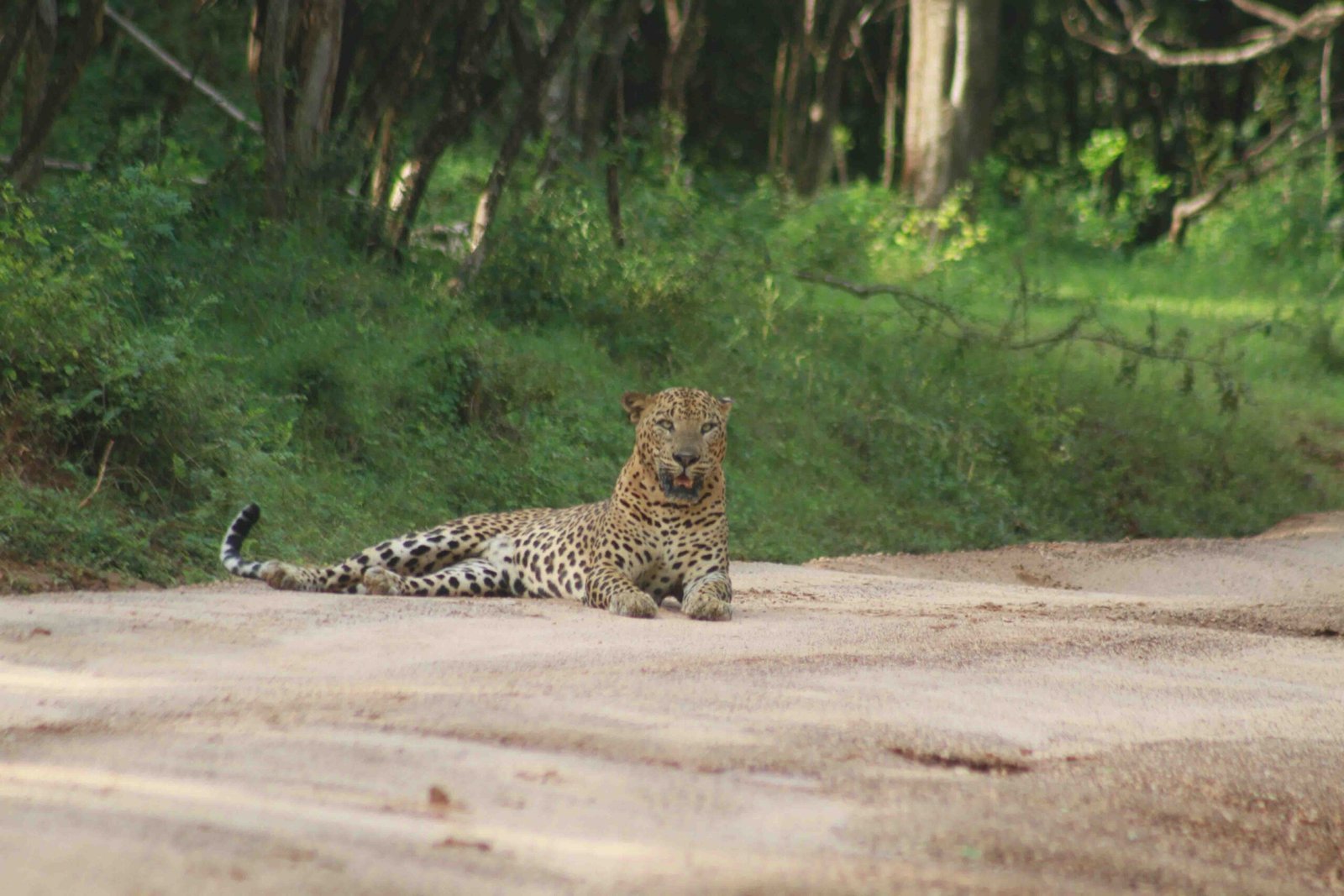
Yala’s leopards are also unusually tolerant of vehicles. Decades of safari traffic without hunting pressure have taught them that a jeep full of people is not a threat. That is why you can often watch a leopard walk along the road, drink at a waterhole, or rest on a rock in full view, sometimes just meters from the jeep. Few other places let you get this close to a wild big cat without a fence or a long lens doing the work for you.
Sri Lankan leopard: quick facts
The Sri Lankan leopard is its own subspecies, found nowhere else on Earth. A few facts worth knowing before your safari:
- Scientific name: Panthera pardus kotiya, endemic to Sri Lanka.
- Size: Males can weigh up to around 77 kg, females considerably less.
- Status: Sri Lanka has no lions or tigers, so the leopard is the island’s apex predator and sits at the top of the food chain with no competition from other big cats.
- Coat: Golden-yellow fur with dark rosettes, and no two individuals share the same pattern.
- Diet: Spotted deer, wild boar, hare, and monkeys make up most of a Yala leopard’s diet.
- Behaviour: Solitary and territorial. Males mark trees with claw scratches and scent, and both sexes favour raised rocks where they can watch the surrounding grassland while they rest.
- Lifespan: Wild leopards in Sri Lanka typically live 12 to 15 years.
Best time of day to see a leopard
Leopards are crepuscular. They are most active at dawn and dusk, and they rest through the hottest hours of the day.
Morning safari, around 6:00 AM to 10:00 AM: leopards often use the cooler morning hours to walk the roads before the heat sets in. Being at the gate the moment it opens gives you the best window before other jeeps spread out across the park.
Afternoon safari, around 2:30 PM to 6:00 PM: good for catching leopards as they wake from a midday rest and start moving again before sunset.
Full-day safari, around 6:00 AM to 6:00 PM: the strongest option if a leopard sighting is your main goal. You cover both activity windows, and if another jeep radios in a sighting, you are already inside the park and can reach it quickly instead of waiting at the gate for your slot to start.
Best time of year to see a leopard
The dry season, roughly February through July, is the best stretch for leopard sightings. As smaller waterholes dry up, animals concentrate around the larger, permanent water sources, and that concentration makes leopards, deer, and elephants easier to find in one place. Vegetation also thins out in the dry months, which improves visibility across the grassland and along the rocky ridgelines leopards favour.
Yala closes for about a month most years, usually sometime in September, for park maintenance and controlled habitat management. If you are planning a trip for that period, check the current closure dates before you book, since they shift slightly from year to year. The wetter months from October to January still produce sightings, just with more rainfall and thicker cover to see through.
Block 1 vs Block 5 for leopard sightings
Yala is split into several numbered blocks, but almost all leopard safaris run through two of them.
Block 1 has the highest leopard density in the park and the best overall odds of a sighting. It is also the most visited block, so a good sighting can mean several jeeps parked together around one leopard.
Block 5 sees far fewer vehicles and gives a quieter, more private experience. Leopard density is lower here, so sightings take more patience, but you will likely have any sighting mostly to yourself.
We can talk you through which block fits your priorities when you book. For a longer comparison, see our Block 1 vs Block 5 guide.
How our guides find leopards
Finding a leopard is less about luck than local knowledge. Our driver-guides work off several signals:
- Alarm calls: spotted deer and langur monkeys give distinct alarm calls when a predator is nearby, and an experienced guide can tell a leopard alarm from a general one.
- Tracks and marks: fresh pug marks, drag marks from a kill, and claw scratches on tree bark all point to recent leopard activity in an area.
- Known resting spots: leopards return to the same rocky outcrops again and again, and our guides know which ones to check first, including the areas around Patanangala.
- Jeep network: drivers radio each other when they spot something, so a sighting anywhere in the block can bring several jeeps to the same leopard within minutes.
What our leopard safari includes
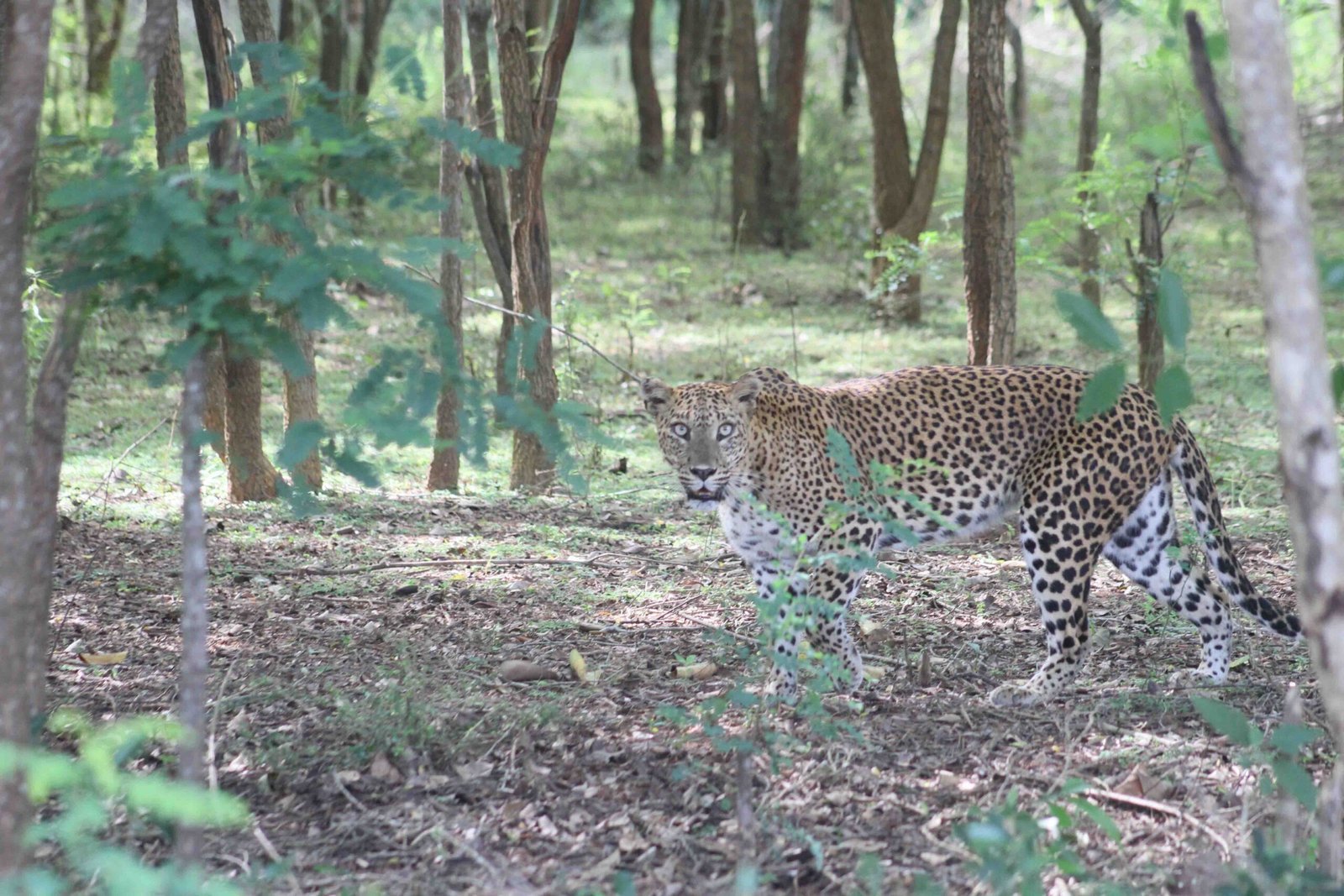
Every Menaka Safari leopard safari runs in a Toyota Hilux 4×4 with an experienced local driver-guide who knows the park’s leopard hotspots. We handle park entrance formalities, and pickup is available from Tissamaharama, Kataragama, Weerawila, and Debarawewa. See our pickup locations guide for exact details on each town.
You can book a morning, afternoon, or full-day safari, and we are happy to build the drive around leopard sightings specifically if that is your main goal for the day. Full pricing is on our packages page.
Conservation and safari etiquette
Yala’s leopards stay relaxed around jeeps because guides and visitors keep their distance and behave predictably. A few rules keep it that way:
- Guides keep a respectful distance and never block a leopard’s path or force it to move.
- No baiting, no calling, and no leaving the jeep near wildlife. All of this is illegal inside the park and it changes animal behaviour for the worse.
- Keep noise down at a sighting. Loud voices and sudden movement are the fastest way to end one early.
- Photography is welcome, but flash photography at night drives and close range disturbs the animal and is discouraged by park rules.
Mistakes that cost people a sighting
A few patterns show up again and again in disappointed safari reviews, and most of them are avoidable:
- Booking a short safari in the middle of the day. A 2-hour midday drive skips both activity windows entirely.
- Traveling in the wet season and expecting dry-season odds. Thicker cover and scattered water genuinely lower sighting rates between October and January.
- Choosing Block 1 for solitude. It has the best odds, not the quietest experience. If you want fewer jeeps, ask about Block 5 instead.
- Only doing one safari. Leopards are wild animals, and even a well-timed single drive can come up empty. Two shorter safaris on different days beat one long safari for total odds.
- Skipping binoculars. Many sightings are leopards resting on distant rocks, not animals crossing the road in front of the jeep.
Tips to improve your odds
- Book the full-day safari if a leopard is your priority. More time in the park means more chances, and you get both activity windows.
- Travel in the dry season, February through July, for the best combination of concentrated wildlife and clearer sightlines.
- Bring binoculars and a zoom lens. Leopards are often spotted at distance, resting on a rock or lying in tall grass.
- Stay quiet at a sighting. Let the guide position the jeep and wait for the leopard to move naturally.
- Do more than one safari if your schedule allows it. Two attempts on different days consistently beat one long attempt.
FAQ
Are leopard sightings guaranteed at Yala?
No safari can guarantee a sighting, since leopards are wild animals. Yala gives you better odds than almost anywhere else, and a full-day safari in the dry season is the strongest combination available.
Which block should I choose for leopards?
Block 1 has the highest density and the best overall odds. Block 5 is quieter and less crowded, with lower density but a more private experience.
How many leopards live in Yala?
Exact counts vary by survey and by block, but Yala’s leopard density is among the highest recorded anywhere for the species, concentrated mainly in Block 1.
What should I bring on a leopard safari?
Binoculars, a camera with zoom, sun protection, water, and neutral-coloured clothing. See our full packing checklist for the complete list.
Is a leopard safari safe for kids?
Yes. You stay in the jeep at all times and never approach the animal on foot. See our safari with kids guide for age-specific tips.
How do I book a leopard safari with Menaka Safari?
Contact us through our contact page, by phone at +94 77 961 8415, or by email at Yalasafarimenaka@gmail.com, and we will help you plan the timing and block that fit your trip.
