Seetha Amman Temple: Walking Through Sri Lanka’s Living Ramayana
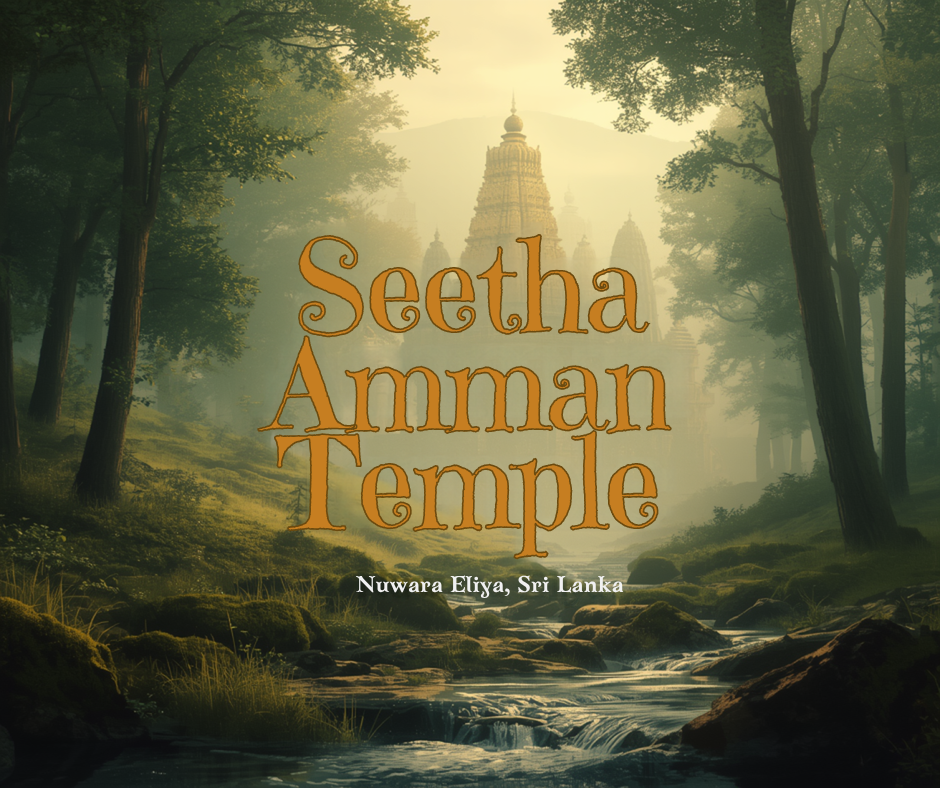
Tucked into the misty hills of Nuwara Eliya, the Seetha Amman Temple is one of Sri Lanka’s most quietly extraordinary sites — a place where ancient legend and everyday devotion meet on a mountain roadside. For travelers tracing the island’s mythological past, or simply looking for a peaceful stop between tea estates and waterfalls, this small Hindu shrine offers something few other places can: a direct thread to one of the world’s oldest epics.
A Temple Built on Legend
According to the Ramayana, the demon king Ravana abducted Sita (also spelled Seetha), wife of Lord Rama, and brought her to Lanka. Local tradition holds that the valley now known as Seetha Eliya, just outside Nuwara Eliya town, was where she was held during her captivity — kept not in Ravana’s palace, but in a nearby garden of ashoka trees, the Ashok Vatika. It’s also said to be the spot where Hanuman, Rama’s devoted ally, first found Sita and presented her with Rama’s ring as a sign that help was on its way.
The temple that stands here today is widely believed to be the only shrine in the world dedicated specifically to Sita. While the current structure was built in the early 2000s, replacing a much simpler tree shrine, the site’s spiritual roots appear far older — a coin dating back to 1894 was reportedly unearthed during renovation work, and three ancient idols, one said to depict Sita herself, were found in the stream that runs alongside the temple grounds. That same stream is where devotees believe Sita bathed during her time here, and pilgrims still visit it today seeking blessings.
What You’ll See on Arrival
The temple sits at a cool, high-altitude elevation, wrapped in the kind of soft mountain mist Nuwara Eliya is famous for. Inside, statues of Rama, Sita, Lakshmana, and Hanuman anchor the main shrine, framed by carvings depicting scenes from the epic. Just outside, on a rocky outcrop, visitors are shown two large depressions in the stone — said locally to be footprints left by Ravana’s elephant.
The atmosphere here is unusually layered for such a small site: it’s a functioning Hindu place of worship, a popular tourist stop, and a pilgrimage point on what’s known as the Ramayana Trail — a loose circuit of sites across Sri Lanka connected to the epic, which also includes the Hakgala Botanical Gardens (said to be part of the original Ashok Vatika) a short distance away. The temple’s biggest festival, Rama Navami, draws large crowds of devotees each year.
For a fuller walk-through of the temple’s history and visiting details, our friends at Fineray Lanka Tours have put together an in-depth guide to the Seetha Amman Temple, well worth a look if you’re planning the hill-country leg of your trip.
Why It’s Worth the Detour
Nuwara Eliya is usually visited for its tea country scenery and colonial-era charm, but the Seetha Amman Temple adds a different dimension entirely — mythology you can stand inside. Whether or not you come with any religious connection to the story, there’s something genuinely striking about a roadside shrine that’s spent over a century, arguably far longer, holding onto one thread of a 2,000-year-old poem.
Many travelers pair the hill country leg of a Sri Lanka trip with a stretch further south for wildlife — Yala National Park is the most popular pick for leopard and elephant sightings, and an easy way to round out a highland-to-coast itinerary.
Getting There
The temple is located a few kilometers outside Nuwara Eliya town, close to Hakgala Botanical Garden, and is easily reached by car or tuk-tuk. It’s a modest, open site — no formal entry fee, though donations are welcomed — and can comfortably be visited in 30 to 45 minutes, making it easy to slot into a broader hill-country day trip.
Quick Facts
| Location |
Seetha Eliya, near Nuwara Eliya, Central Province |
| Significance |
Believed to be the only temple in the world dedicated to Sita |
| Best paired with |
Hakgala Botanical Gardens, Horton Plains |
| Ideal visit length |
30–45 minutes |
| Best time to visit |
Year-round; especially lively during Rama Navami |