Sri Lankan Leopard at Yala: Facts, Behaviour & How to Spot One
The Sri Lankan leopard (Panthera pardus kotiya) is one of the most remarkable animals on Earth — and Yala National Park is the best place in the world to see one in the wild. Here is everything you need to know before your safari. The leopard is one of Yala’s “big three” alongside the Sri Lankan elephant and the Sri Lankan sloth bear.
What Makes the Sri Lankan Leopard Unique?
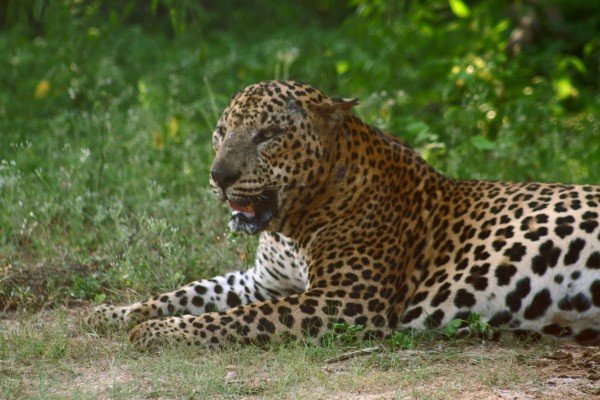
The Sri Lankan leopard is a distinct subspecies of leopard, found only on the island of Sri Lanka. It is the largest subspecies of leopard found on any island in the world, and has evolved in fascinating ways due to its island isolation.
Because Sri Lanka has no lions or tigers — the apex predators that dominate leopard behaviour in Africa and mainland Asia — the Sri Lankan leopard has moved into the role of apex predator. It is bolder, more active in daylight, and less secretive than its African or Indian cousins. This is the primary reason Yala offers such extraordinary leopard sightings compared to other destinations.
Size and Appearance
Male Sri Lankan leopards weigh between 56 and 77 kilograms — significantly heavier than leopards in Africa. Females are smaller, typically 29–50 kilograms.
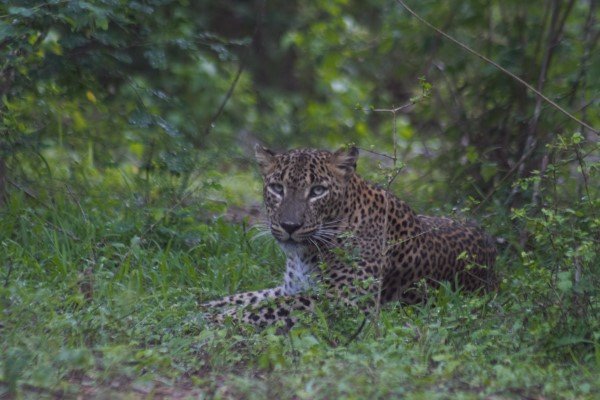
The coat is tawny-golden with characteristic dark rosette markings. Inside Yala, experienced guides can identify individual leopards by their unique rosette patterns — like fingerprints, no two leopards have identical markings.
Yala’s leopards have a slightly stockier build than African leopards, adapted to navigating rocky terrain rather than open savannah.
Population and Territory
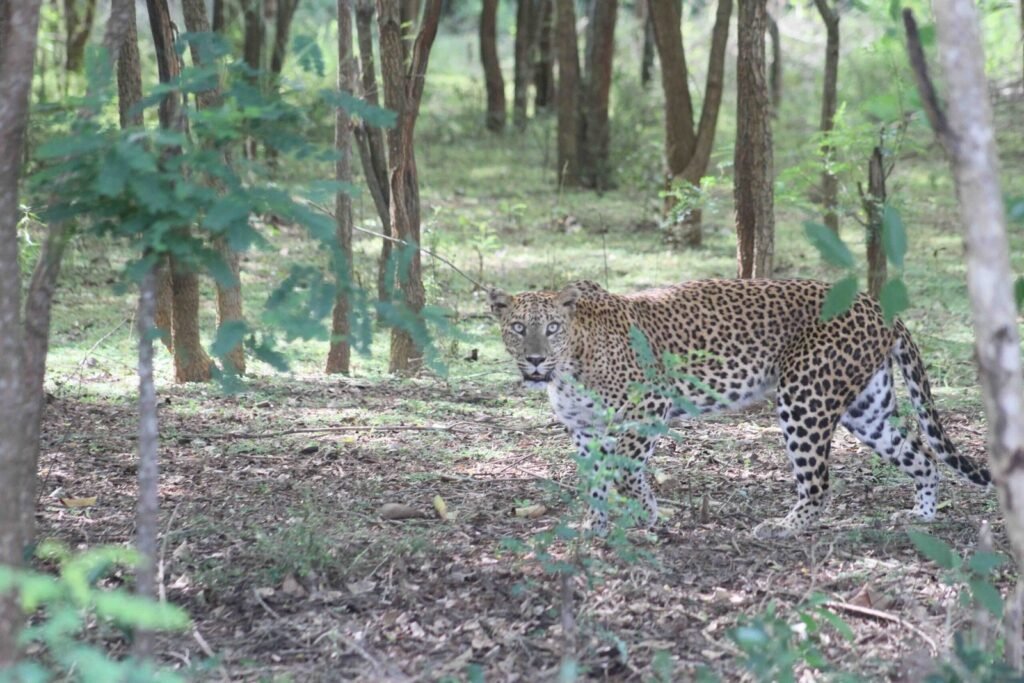
Yala National Park Block 1 has been estimated to hold between 30 and 50 leopards — giving it the highest density of leopards per square kilometre of any national park on Earth. This extraordinary concentration is the reason Yala has become the world’s most famous leopard destination.
Each adult male controls a large territory of several square kilometres. Female territories are smaller and often overlap with one male’s range. Our guides have tracked these territories over years and know where to find specific individuals during different seasons.
Daily Behaviour: When Do Leopards Hunt?
Leopards are crepuscular — most active in the hour before dawn and the hour after dusk. This is why Menaka Safari’s 4:30 AM Leopard Safari has such a high sighting rate: we enter the park precisely at the moment leopards are finishing their night’s hunt.
After hunting, leopards often rest on rocky outcrops in the early morning — visible, exposed, and photogenic. By mid-morning, they typically retreat to shade inside dense cover, making them much harder to find.
What Do They Hunt?
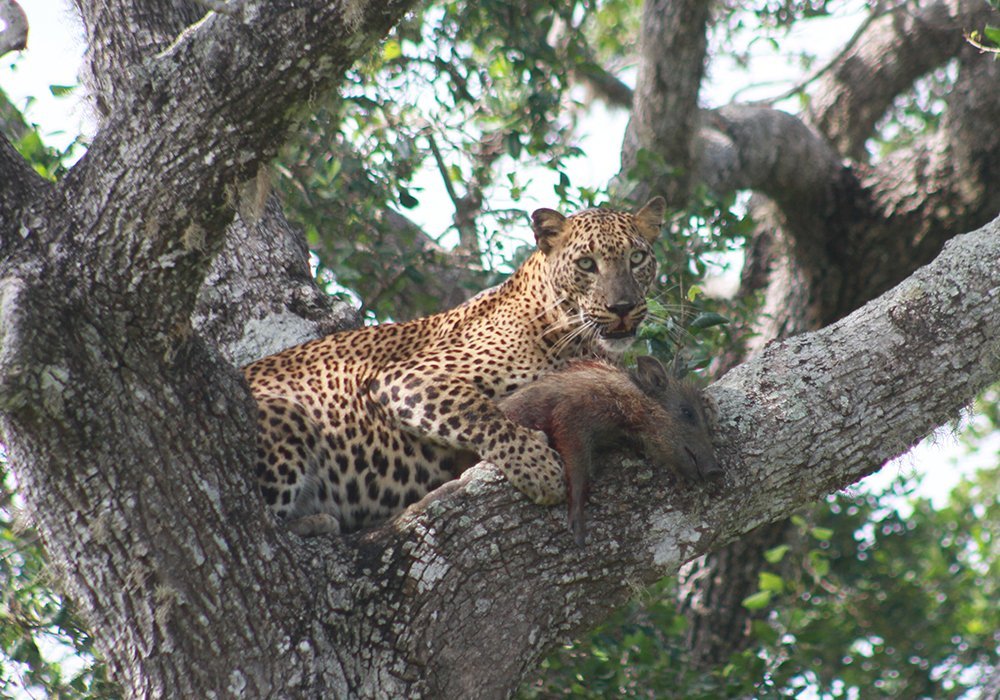
In Yala, the primary prey of leopards is spotted deer (Axis axis), which are abundant throughout the park. Leopards also hunt sambhur deer, hare, and smaller animals. Unlike their African relatives, Yala’s leopards rarely cache kills in trees — there is simply no competition that forces them to.
How Our Guides Find Leopards
Tracking a leopard in Yala requires a combination of knowledge, patience, and reading the environment.
Fresh footprints in the dust road are the clearest indicator — a crisp paw print with sharp edges means the leopard passed within the last hour. Our guides check the main tracks at dawn every day.
Alarm calls from spotted deer are perhaps the most reliable signal. A sharp, repeated bark from a deer — different from its normal call — signals that the deer has detected a predator nearby. Our guides react to these calls immediately.
Bird behaviour also reveals predator locations: small birds mobbing from a bush, or a flock taking sudden flight, often indicates a large cat is below.
How Many Leopards Will You See?
Most sightings involve one individual — usually seen resting, walking a trail, or crossing an open area. Sightings of two leopards together (a mating pair or a mother with older cubs) do occur and are extremely special.
Cubs are occasionally seen between July and December when Yala’s females with young cubs are more visible. A sighting of a mother leopard with cubs is the most treasured wildlife encounter we offer.
Conservation Status
The Sri Lankan leopard is classified as Vulnerable by the IUCN, with an estimated population of fewer than 1,000 individuals on the island. Yala National Park is the single most important conservation area for this subspecies, providing protected territory, abundant prey, and relative freedom from human disturbance.
By visiting Yala through responsible operators like Menaka Safari, you contribute to the local economy that supports the park’s continued protection.
See Sri Lanka’s Leopards With Menaka Safari
Our Leopard Safari (4:30 AM departure) is designed specifically to give you the best possible encounter with Yala’s extraordinary leopards. Our guides know individual animals, their territories, and their daily patterns. See our full leopard safari guide for timing, block choice, and tips to improve your odds.
📱 WhatsApp us to book your Leopard Safari today.
👉 View all our Yala safari packages here.